For guardians caring for an infant, realizing their child suffers from hearing impairment can trigger overwhelming feelings of anxiety. Fortunately, the reassuring perspective dictates that through timely checks and early help, babies with hearing issues can realize remarkable achievements. Indeed, these children can build language, communication skills, and strong connections with the world around them, leading to a vibrant, rewarding life!
Two of the most effective tools for assisting infants with hearing loss consist of pediatric hearing aids and cochlear implants. In this section, our guide analyzes their key operational details so you can select the most suitable choice for your baby.
Unpacking the Foundations of Infant Hearing Loss
Hearing impairment across infants often develops through various distinct health factors, such as:
- Underlying genetic predispositions (even without recorded familial lineage)
- Targeted in-utero viral infections such as cytomegalovirus (CMV) and rubella cases
- Complex intrapartum events, featuring fetal oxygen deprivation or early delivery
- Specific medications used in specialized neonatal intensive care
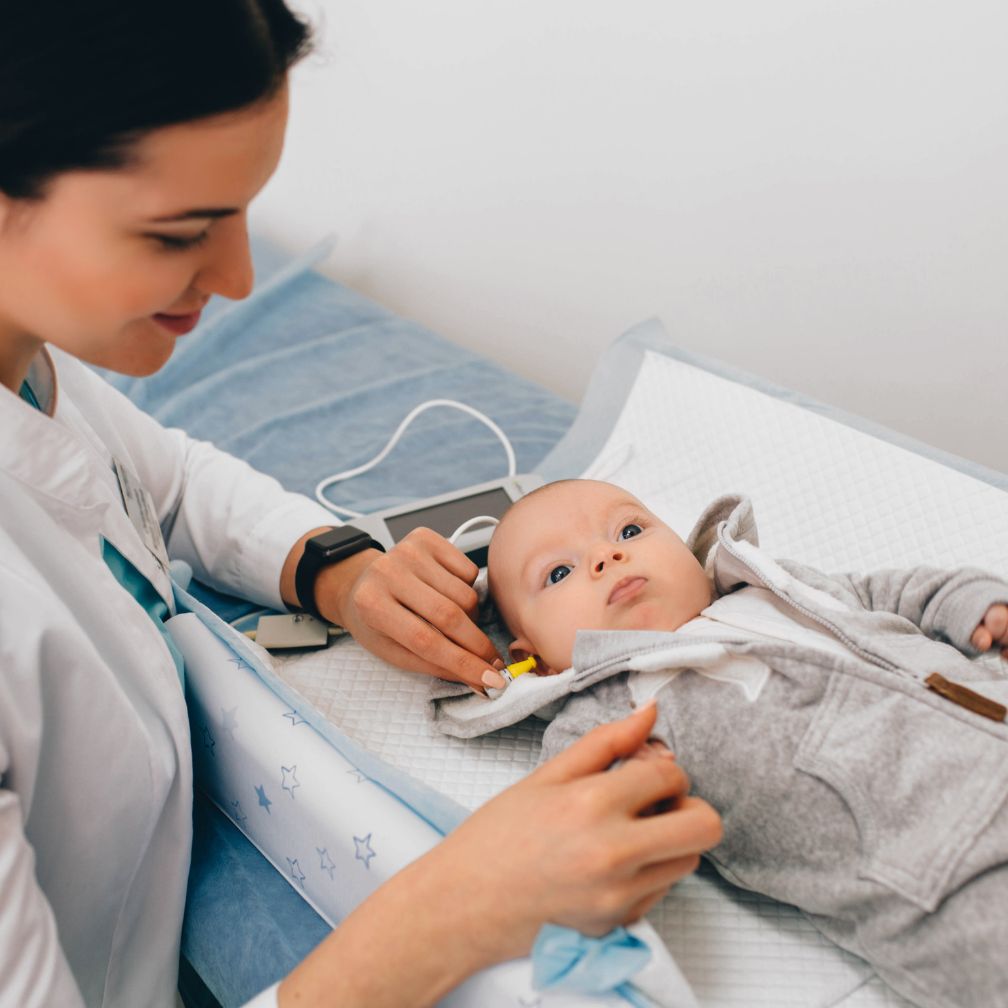
Which milestone takes precedence for parents? Early diagnostic testing. This necessity explains why babies across the United States undergo auditory checks prior to leaving the birth facility. Certified pediatric audiology experts faithfully maintain the official “1-3-6” operational timeline:
- Primary hearing check completed within 30 days of birth
- Official diagnostic verdict achieved within 3 months
- Therapeutic intervention (employing wearable technology or developmental therapy) initiated within 180 days of birth
Achieving these explicit timeline goals offers infants their highest probability for superior speech, verbal communication, and brain maturation. If you desire assistance concerning these newborn checks, your family pediatrician will gladly offer support!
Understanding Amplification Devices for Infants
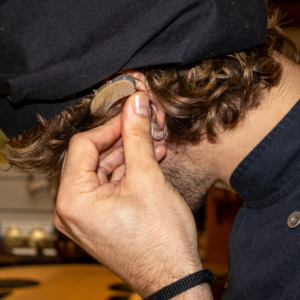
For infants diagnosed with mild to severe auditory loss, electronic hearing aids typically represent the primary clinical remedy. These small, external hearing devices amplify acoustic waves, enabling babies to hear spoken dialogue and environmental sounds much more clearly.
Current pediatric hearing aids function as:
- Exceptionally safe for installation on infants aged just a few weeks
- Built with soft, protective ear impressions that adjust seamlessly as the baby grows
- Equipped with secure battery housing closures and specialized pediatric safety components
- Expertly programmed by a dedicated pediatric audiologist to align with your child’s hearing needs
While your infant develops, hearing aids will need to be adjusted regularly to guarantee physical comfort and optimal performance.
Advanced Surgical Solutions: Infant Cochlear Implants
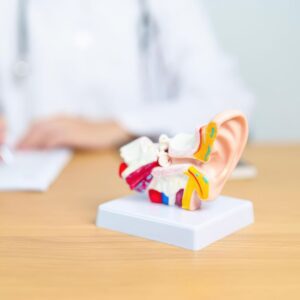
If a young child displays severe to profound sensorineural deficits and receives minimal relief from hearing aids, a cochlear implant stands as a primary recommendation. Unlike standard acoustic hearing aids, cochlear implant devices:
- Call for precise surgical installation directly into the auditory system
- Safely bypass damaged hair cells inside the cochlea
- Convert acoustic waves into direct electrical signals that trigger the acoustic nerve directly
Specialized pediatric cochlear implants act as:
- Officially cleared by the FDA for use with pediatric patients starting at 9-12 months of age
- Exceptionally effective when paired with early developmental therapy and strong family involvement
- Prescribed solely after complete multi-disciplinary testing by a pediatric audiology clinician and an ENT specialist
This diagnostic phase features high-resolution imaging, detailed hearing tests, and setting realistic expectations for future communicative success.
Comparing Hearing Aids and Cochlear Implants: Key Differences
- Mild to severe auditory decline uses Hearing Aids; Severe to profound hearing impairment calls for Cochlear Implants
- Non-Invasive: Hearing Aids; Invasive (Surgical): Cochlear Implants
- Standard sound amplification logic: Hearing Aids; Converts Sound Electrical Signals: Cochlear Implants
- Intervention starts in early infancy: Hearing Aids; Starts at 9-12 Months: Cochlear Implants
Closing Perspective: Choosing Between Hearing Aids and Implants
In the event your infant receives a hearing loss diagnosis, you have options and plenty of support. With the help of pediatric hearing specialists, countless infants successfully cultivate communication skills that mirror those of their age group.
Whether your baby benefits most from custom hearing aids or a cochlear implant system, prompt intervention delivers permanent lifelong benefits.
Have you got specific questions concerning your newborn’s hearing abilities? Reach out to our specialists today to obtain an exhaustive evaluation and custom-designed care plan.