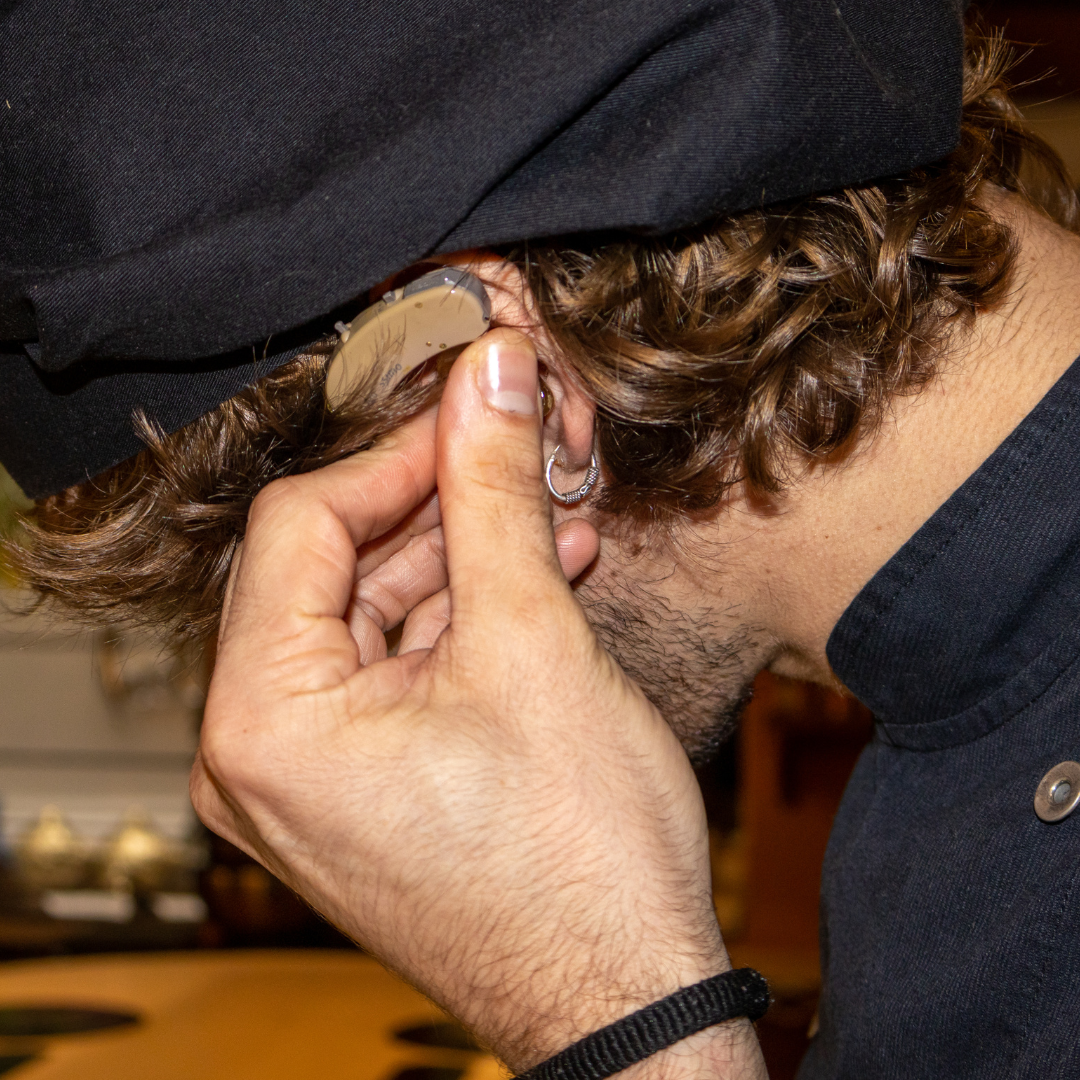
Restaurant conversations can be difficult to follow when environmental noise competes with your focus and hearing. Our clinical team can evaluate hearing across quiet settings and background-noise environments to pinpoint specific auditory challenges. After uncovering the precise factors driving your difficult hearing, our team helps you select individualized auditory solutions.
Why Can I Hear Normally but Struggle to Listen in a Restaurant?
In quiet conditions, an optimal signal-to-noise ratio ensures that the desired speaker sounds markedly clearer than surrounding sound. Dining venues establish an entirely contrary auditory challenge. Competing conversations, background music, tableware clatter, and acoustic reflections clash with incoming speech, making auditory processing exceptionally strenuous.
This problem can occur with high-frequency hearing loss, auditory-processing difficulty, or age- and noise-related changes. Poor visual illumination, mental fatigue, physical distance from the speaker, and divided focus exacerbate speech-recognition problems. It is common to display normal baseline audibility on conventional hearing tests while failing comprehensive speech-in-noise testing. Experiencing speech-recognition struggles in noisy dining venues warrants a formal audiological evaluation regardless of seemingly normal quiet hearing.
The Audiological Process for High-Frequency Hearing Loss
We begin by reviewing your history of communication difficulties, prior noise exposures, ringing or tinnitus, pharmaceuticals, and unilateral symptoms.
Pure-tone audiometric evaluations measure the absolute quietest sounds audible across specific octave frequencies using air and bone conduction. A clinical presentation of high-frequency loss produces a downward-sloping audiogram where auditory thresholds worsen significantly at higher frequencies. Further clinical diagnostics feature tympanometry to evaluate eardrum and middle-ear mechanics as well as word-recognition testing for speech comprehension.
Because testing in a silent booth does not mirror real-life restaurant environments, speech-in-noise testing supplies vital diagnostic clarity. It calculates your ability to identify verbal phrases as competing background noise levels rise. Interpreted together, these clinical scores demonstrate whether listening struggles originate from loss of audibility, speech clarity deficits, auditory processing delays, or combined elements.
Understanding Auditory Processing Disorders in Noisy Environments
A diagnosed auditory processing disorder affects how the brain’s auditory cortex analyzes, organizes, and interprets sound. The peripheral auditory system may register sounds within normal limits, yet the brain falters when separating competing acoustic inputs, sorting speech sounds, or tracking fast speech. We prioritize assessing peripheral auditory acuity before recommending an in-depth central auditory-processing assessment or external medical referrals.
How to Improve Speech Clarity in Challenging Acoustic Environments
Targeted behavioral changes optimize the acoustic speech signal reaching your auditory system while providing clear visual context. Before leaving home, identify quieter dining venues or plan to eat during less crowded service times. Dining locations utilizing sound-absorbing elements like booths, felt panels, window curtains, and carpet offer better acoustics than high-ceilinged rooms with hard surfaces.
In-venue communication guidelines:
- Ask host staff for a quiet table distanced from kitchen traffic, bar noise, audio speakers, and loud group tables.
- Sit with a perimeter wall directly behind you to cut down on ambient noise approaching from the rear.
- Seat yourself facing conversation partners under clear, bright lighting to facilitate visual speechreading.
- Keep the distance between speakers as short as comfortably possible.
- Orient your stronger ear toward the key person you want to follow in conversation.
- Instruct conversational partners to reword missed phrases instead of repeating the entire sentence verbatim.
- Confirm important details rather than pretending to understand.
- Excuse yourself for a momentary quiet pause when listening exhaustion starts to mount.
- Request that dining partners articulate words distinctly at an unhurried, natural speed.
- Raised or shouting voices warp acoustic phonetics and rarely improve speech intelligibility.
What Are the Best Tools for Hearing with Background Noise?
Selecting the ideal assistive technology depends upon underlying diagnosis, specific acoustic challenges, and verified hearing loss. Advanced hearing aids utilize beamforming directional microphones, adaptive noise reduction, and specialized restaurant programs to elevate voices directly ahead while suppressing ambient chatter. Maintaining realistic expectations remains essential, as no auditory device can isolate conversation by removing all surrounding voices.
Wireless remote microphones provide the most effective enhancement to real-world signal-to-noise ratios. Worn on the speaker’s collar or set on the table, the microphone broadcasts direct audio to paired hearing aids or specialized receivers. This strategy bypasses the detrimental effects of room reverberation, distance, and localized background chatter.
Other useful options include:
- Wireless conference table microphones that capture multi-speaker discussions
- Hearing-loop telecoils that stream clean audio in loop-equipped establishments
- Mobile speech-to-text applications delivering instant visual captions during dinner
- Consumer wireless earbuds or hearables featuring customizable assistive listening modes
- Sound-meter apps and acoustic dining directories for locating quiet venues
We will help compare available technology, verify device compatibility, and instruct you on utilizing your selected hearing equipment.
Professional Audiological Solutions for Loud Listening Environments
A comprehensive hearing evaluation looks far beyond the common misconception of “I hear fine in quiet environments.” We assess the specific acoustic settings, speaker dynamics, and volume levels that disrupt your hearing to administer targeted evaluations. Your diagnostic appointment may incorporate pure-tone air and bone thresholds, acoustic middle-ear testing, word-recognition scores, and speech-in-noise measures. Dedicated central auditory-processing testing will be scheduled if your history and primary diagnostic testing indicate central pathway issues.
Sudden unilateral hearing drops, acute asymmetric changes, or rapid auditory decline mandate evaluation by an ear, nose, and throat physician. Dedicated individualized care pinpoints the underlying auditory cause rather than dismissing your struggles as standard restaurant noise.
Request an Audiology and Hearing Evaluation Today
If crowded restaurant settings cause you to feel disconnected, tired, or forced to guess at conversations, arrange a diagnostic hearing evaluation today. We can evaluate targeted solutions to optimize your hearing in noisy environments using prescription hearing aids, assistive listening technology, or communication strategies tailored to you.
Connect with us today to arrange your clinical visit and take the first step toward clearer, easier dining communication.